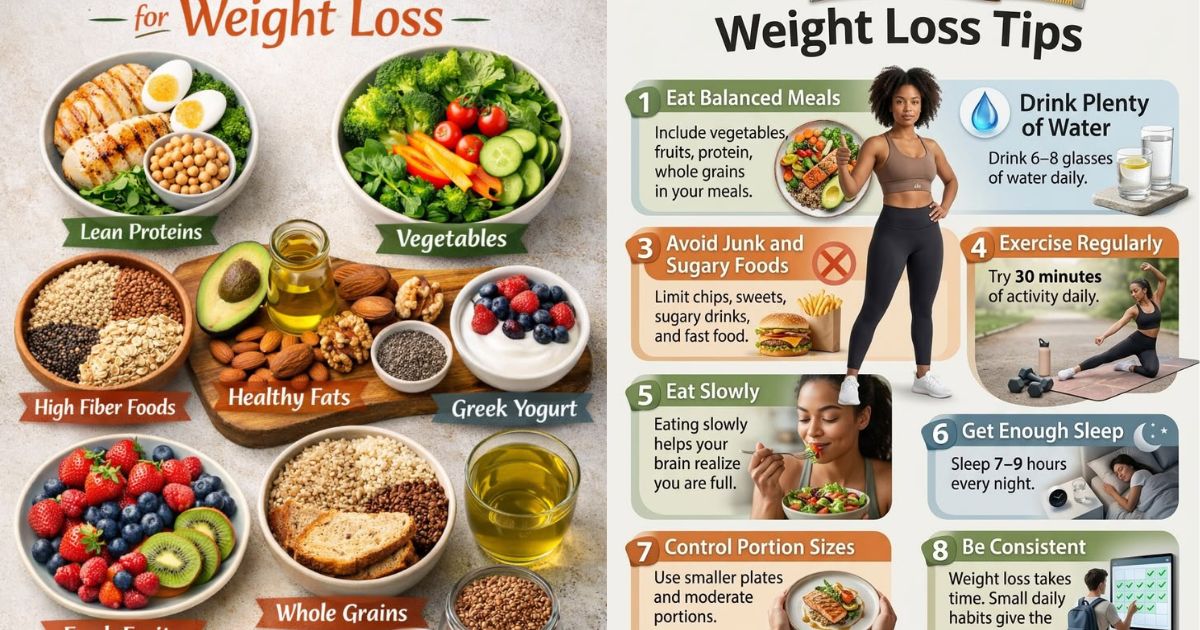
Losing weight in a healthy and sustainable way starts with one essential factor: the food you eat. While exercise and lifestyle habits are important, nutrition plays the biggest role in determining whether you gain, lose, or maintain weight. Choosing the right foods can help you feel full longer, reduce cravings, boost metabolism, and support overall health.
This guide explores the best foods for healthy weight loss, why they work, and how you can incorporate them into your daily routine. Instead of restrictive dieting, the focus here is on nourishing your body with the right nutrients while naturally reducing excess body fat.
Understanding the Role of Food in Weight Loss
How Food Affects Your Body Weight
Every food you eat provides calories, which your body uses as energy. When you consume more calories than your body needs, the excess is stored as fat. When you consume fewer calories than you burn, your body uses stored fat for energy, leading to weight loss.
However, not all calories are equal. The type of food you eat affects hunger, hormones, metabolism, and energy levels. That’s why choosing nutrient-dense foods is crucial.
What Makes a Food Good for Weight Loss
The best foods for weight loss typically share these characteristics:
- High in nutrients
- Low to moderate in calories
- Rich in fiber or protein
- Filling and satisfying
- Minimally processed
These qualities help control appetite and prevent overeating.
Protein-Rich Foods for Fat Loss
Why Protein Is Essential
Protein is one of the most important nutrients for weight loss. It helps reduce hunger, increase metabolism, and preserve muscle mass during fat loss.
Eating enough protein can also reduce cravings and late-night snacking.
Best Protein Sources
Lean Meat
Lean meats are high in protein and low in fat, making them ideal for weight loss.
Examples include:
- Chicken breast
- Turkey
- Lean beef
These foods are filling and help maintain muscle.
Fish and Seafood
Fish is not only rich in protein but also contains healthy fats like omega-3 fatty acids.
Good options include:
- Salmon
- Tuna
- Sardines
These support heart health while aiding weight loss.
Eggs
Eggs are a highly nutritious and affordable protein source. They help keep you full and provide essential vitamins and minerals.
Eating eggs for breakfast can reduce calorie intake throughout the day.
Plant-Based Protein
For those who prefer plant-based diets:
- Lentils
- Chickpeas
- Tofu
- Tempeh
These provide protein along with fiber, which enhances satiety.
Fiber-Rich Foods That Keep You Full
Why Fiber Matters
Fiber slows digestion and helps you feel full for longer periods. It also stabilizes blood sugar levels, preventing sudden hunger spikes.
Best High-Fiber Foods
Vegetables
Vegetables are low in calories and high in nutrients, making them perfect for weight loss.
Top choices include:
- Broccoli
- Spinach
- Carrots
- Cabbage
You can eat large portions without consuming too many calories.
Fruits
Fruits provide natural sweetness along with fiber and vitamins.
Best options:
- Apples
- Berries
- Oranges
- Pears
They are excellent alternatives to sugary snacks.
Whole Grains
Whole grains are more filling than refined grains and provide steady energy.
Examples:
- Brown rice
- Oats
- Quinoa
- Whole wheat bread
They help prevent overeating and support digestion.
Healthy Fats That Support Weight Loss
The Truth About Fat
Not all fats are bad. Healthy fats are essential for hormone balance, brain function, and overall health.
Including the right fats in your diet can actually help with weight loss by increasing satiety.
Best Sources of Healthy Fats
Avocados
Avocados are rich in monounsaturated fats and fiber. They help you feel full and satisfied.
Nuts and Seeds
Nuts and seeds are nutrient-dense and provide healthy fats, protein, and fiber.
Examples include:
- Almonds
- Walnuts
- Chia seeds
- Flaxseeds
Eat them in moderation due to their calorie density.
Olive Oil
Olive oil is a healthy fat often used in cooking and salads. It supports heart health and adds flavor without unhealthy additives.
Low-Calorie Foods with High Volume
Why Volume Matters
Foods that are low in calories but high in volume allow you to eat more while consuming fewer calories. This helps reduce hunger and makes dieting easier.
Examples of High-Volume Foods
- Leafy greens like lettuce and spinach
- Cucumbers
- Zucchini
- Tomatoes
These foods are mostly water and fiber, making them very filling.
Natural Metabolism-Boosting Foods
Foods That Help Burn More Calories
While no food can magically burn fat, some can slightly increase your metabolism.
Green Tea
Green tea contains compounds that may enhance fat burning and improve metabolism.
Coffee
Coffee can boost energy and increase calorie burning when consumed without added sugar.
Spices
Certain spices may help increase metabolism:
- Chili peppers
- Ginger
- Cinnamon
These can be easily added to meals for extra flavor and benefits.
Foods That Reduce Cravings
Why Cravings Happen
Cravings are often caused by blood sugar fluctuations, stress, or lack of nutrients.
Choosing the right foods can help control these urges.
Best Foods for Reducing Cravings
- High-protein foods like eggs and yogurt
- Fiber-rich fruits and vegetables
- Healthy fats like nuts and avocados
These keep your blood sugar stable and reduce the desire to snack unnecessarily.
Hydrating Foods That Support Weight Loss
The Importance of Hydration
Staying hydrated is essential for metabolism and appetite control. Some foods have high water content and can help with hydration.
Best Hydrating Foods
- Watermelon
- Cucumbers
- Oranges
- Strawberries
These foods are refreshing, low in calories, and satisfying.
Foods to Limit or Avoid
Highly Processed Foods
Processed foods are often high in sugar, unhealthy fats, and empty calories.
Examples include:
- Packaged snacks
- Fast food
- Sugary cereals
Reducing these can significantly improve your results.
Sugary Drinks
Liquid calories are easy to consume in large amounts without feeling full.
Avoid:
- Soda
- Sweetened coffee drinks
- Energy drinks
Choose water or unsweetened beverages instead.
Refined Carbohydrates
Refined carbs can cause rapid spikes in blood sugar, leading to hunger and overeating.
Limit:
- White bread
- Pastries
- Sugary desserts
How to Build a Healthy Weight Loss Plate
The Ideal Meal Structure
A balanced plate should include:
- Protein (chicken, fish, tofu)
- Fiber (vegetables, whole grains)
- Healthy fats (avocado, olive oil)
This combination keeps you full and energized.
Portion Balance
You don’t need to eliminate any food group completely. Focus on balance and moderation.
For example:
- Half plate: vegetables
- Quarter plate: protein
- Quarter plate: whole grains
Sample Daily Meal Plan
Breakfast
- Oatmeal with berries and nuts
- Boiled eggs
- Green tea or black coffee
Lunch
- Grilled chicken salad with olive oil dressing
- Brown rice on the side
Snack
- Apple with a handful of almonds
Dinner
- Baked salmon
- Steamed vegetables
- Quinoa
Long-Term Healthy Eating Habits
Consistency Over Perfection
Healthy eating doesn’t require perfection. Focus on making better choices most of the time.
Listen to Your Body
Pay attention to hunger and fullness cues. Eat when you’re hungry and stop when satisfied.
Plan Your Meals
Planning helps you avoid unhealthy choices and stay on track.
Common Mistakes to Avoid
Eating Too Little
Severely restricting calories can slow metabolism and lead to muscle loss.
Avoiding All Fats
Healthy fats are essential. Avoiding them completely can harm your health.
Relying on “Diet” Foods
Many diet products are highly processed and not as healthy as they seem.
Final Thoughts
Choosing the best foods for healthy weight loss doesn’t have to be complicated. By focusing on whole, nutrient-dense foods that keep you full and energized, you can naturally reduce calorie intake without feeling deprived.
The key is to build balanced meals, stay consistent, and develop habits that you can maintain for life. Weight loss is not just about eating less—it’s about eating better.
With the right approach, you can achieve your goals while improving your overall health and well-being.